Cheese is one of the so-called “living” foods; approximately 3 million microorganisms are responsible for turning milk into cheese. So, what should we do to store cheese at home?
Once it’s made, the ripening process continues thanks to the molds and lactic bacteria that make up the cheese.
Heat accelerates the ripening process, while cold slows it down.
That’s why, when taking cheese home, we need to consider several factors for its storage.
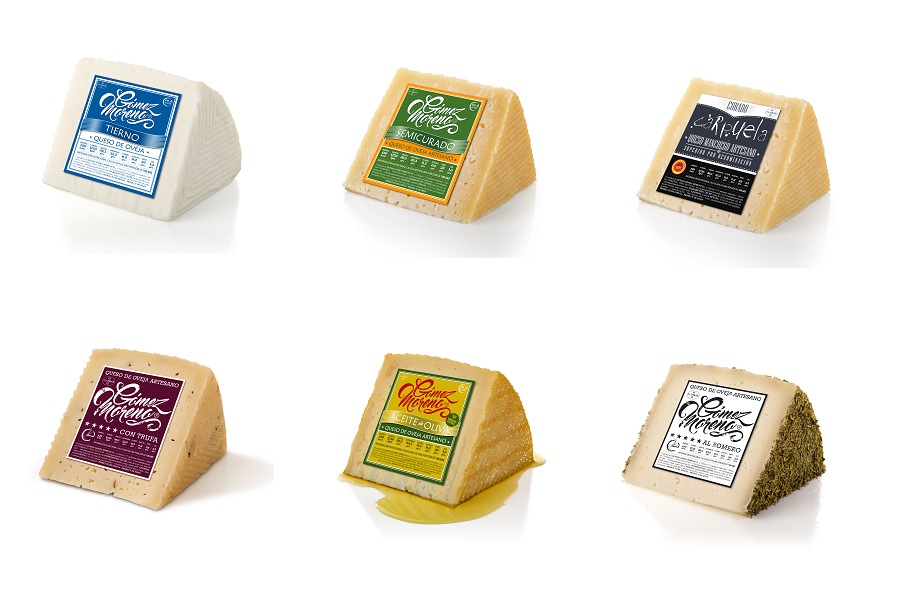
It’s always recommended to buy whole cheese, as a cut piece (half, wedges, etc.) loses a small percentage of its qualities.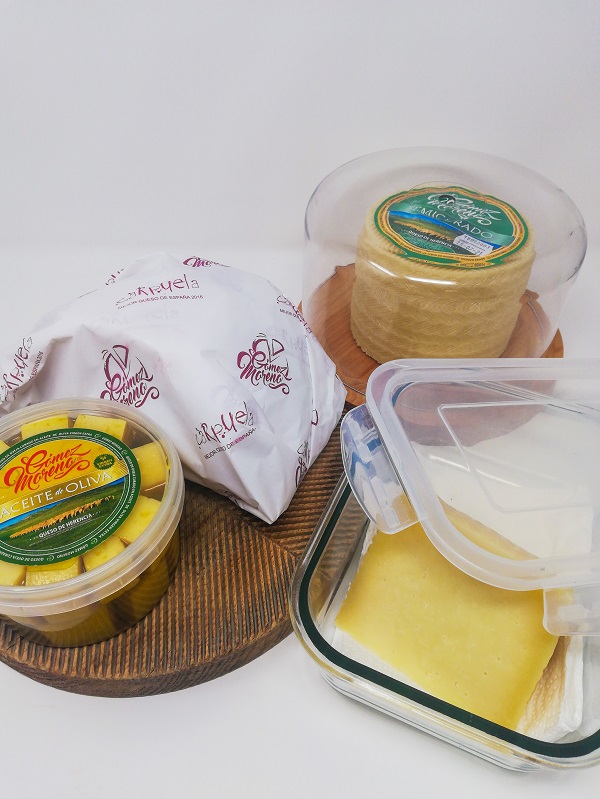
How long does well-stored cheese last?
As a general rule, soft cheeses keep for a shorter time than hard cheeses, as they contain a higher percentage of water, which increases the growth of unwanted bacteria and molds.
In short, a soft cheese can last around 15–20 days, while a hard cheese can be stored for several months if kept properly.
Temperature for storing cheese
When we leave cheese at room temperature, in contact with heat, it tends to sweat. This causes it to lose fat, resulting in changes in texture and flavor.
Therefore, to preserve and maintain the properties of cheese, it should be kept refrigerated most of the time.

We must bear in mind that cold temperatures can dry out and crack cheeses, so depending on the type, we should store them at different temperatures.
In general, cheeses can be divided into two large groups:
- Soft cheeses (gorgonzola, camembert, brie, etc.)
- Hard cheeses (manchego, parmesan, etc.)
Soft cheeses should be kept at temperatures between 4°C and 8°C. However, hard cheeses don’t require such low temperatures and can be kept in optimal condition between 8°C and 15°C.
Some refrigerators have special compartments where the temperature is maintained between 6°C and 10°C. If you have one, it’s ideal for storing cheese there.
Otherwise, cheeses should be stored in the vegetable drawer, as it’s the least cold area—except for fresh cheese, which should be placed at the top of the fridge, since its ideal storage temperature is 4°C.
6 methods for storing cheese at home
Now that we’ve divided cheeses into two main groups and seen the recommended storage temperatures, let’s look at some tips and methods for keeping your cheeses in good condition.
An important point to remember is that the fat in cheese absorbs flavors, so when storing it in the fridge, we must use proper wrapping or containers.
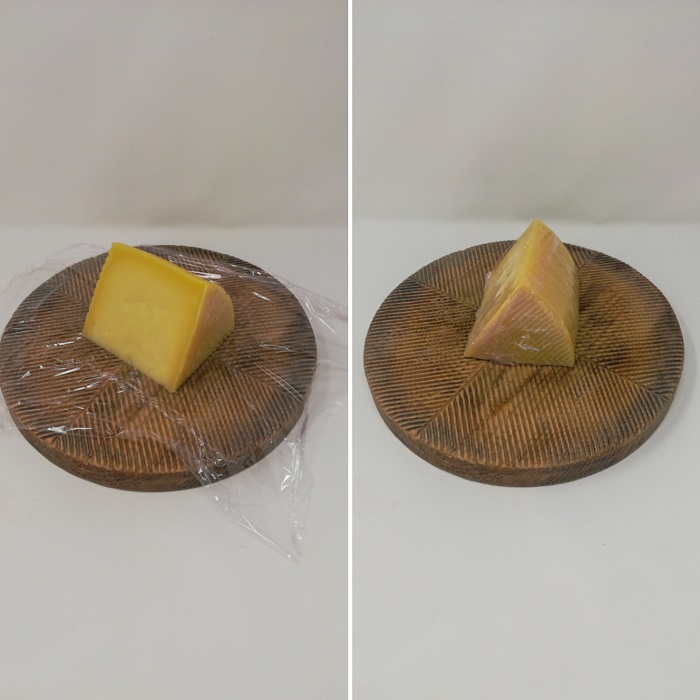
Store cheese with plastic wrap
Plastic wrap, together with the cheese’s original packaging, is one of the best methods for preservation.
When wrapping cut cheese with plastic wrap, make sure it’s tightly sealed to prevent an air pocket between the cheese and the wrap. Air pockets can encourage unwanted mold growth if the fridge is too humid, or dry out the cheese if humidity is too low.
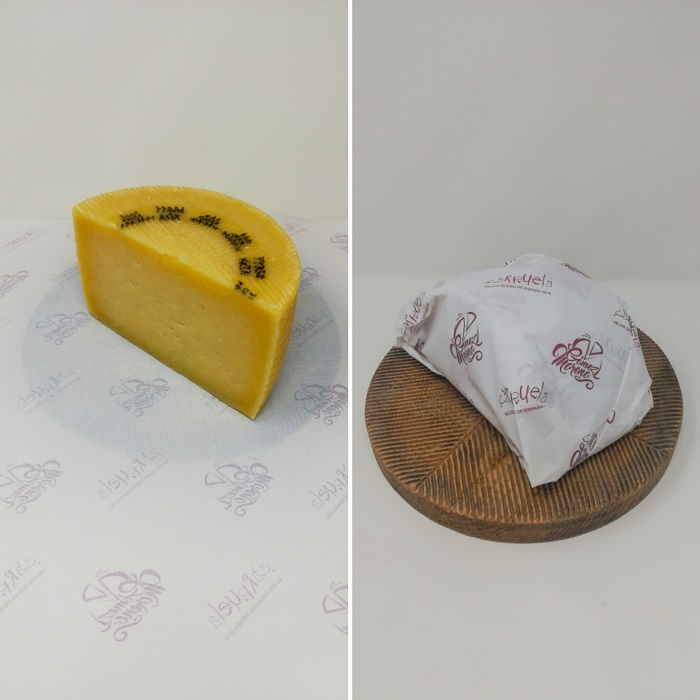
Papel encerado o de horno para conservar tus quesos
This option is similar to the previous one and refers to the paper often used in butcher shops. At Quesos Gómez Moreno, we provide this type of paper when you buy whole cheeses. If you don’t have it, baking paper works just as well—just make sure the cheese is well wrapped.
This paper is one of the best options we suggest, as it protects the cheese well from both moisture and dry air, safeguarding the cut surface and preventing it from picking up unwanted odors or flavors.
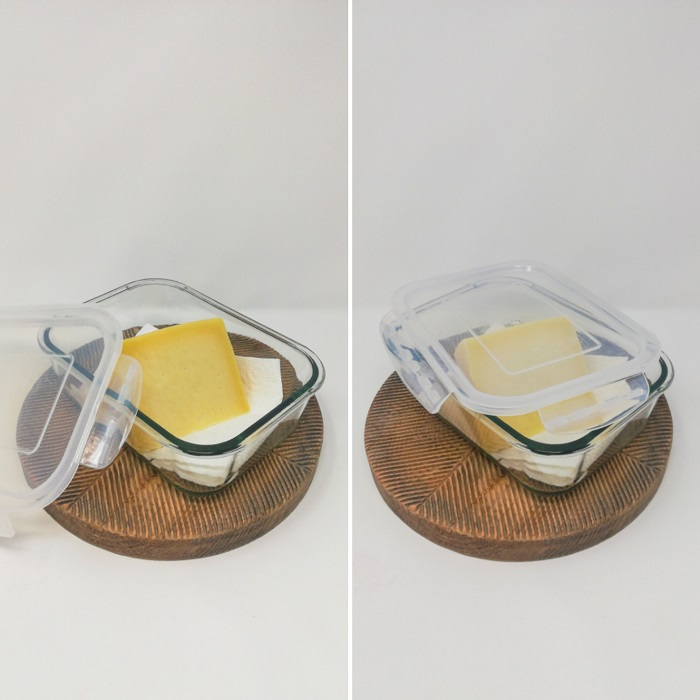
Airtight containers for storing cheese at home
Another option is using airtight containers or Tupperware. If you choose this method, be careful, as soft cheeses may ferment due to lack of oxygen.
It’s a good idea to place a sheet of paper towel at the bottom to absorb any liquid and moisture released by the cheese.
This paper should be changed every 2 or 3 days to prevent fermentation and bad smells.
Store cheese with damp cloths
This was the method used by our ancestors to store cheese.
Damp cotton cloths are perfect for storing cheeses with mold on their surface.
Preserving cheese in olive oil
This involves immersing the cheese in a container with olive oil. This method changes the flavor of the cheese but was one of the most effective and widely used before refrigerators existed. If you want to add a special touch, you can include aromatic herbs like rosemary, oregano, basil, etc.
heese lovers familiar with Gómez Moreno’s cheese in oil will already know this method.

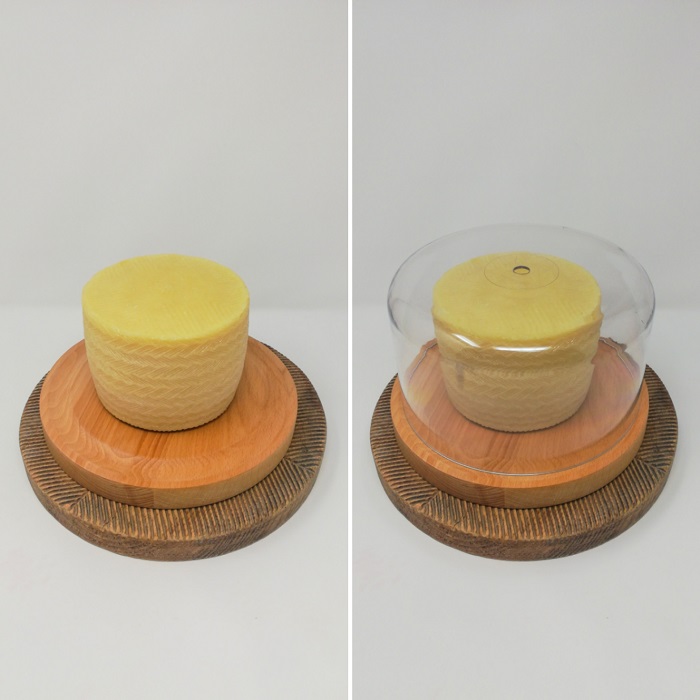
Glass cheese domes for storing cheese
Glass cheese domes are another way to store cheese. In this case, as the cheese is more exposed, care is needed. If the environment is very humid, you can place some dried chickpeas or a little raw rice inside to absorb excess moisture and prevent or delay mold growth.
In most cases—especially with hard cheeses—if mold appears on the cut surface, it doesn’t mean the cheese has gone bad. You can simply cut away the moldy part and continue enjoying your favorite cheese without any risk to your health.
Can we freeze cheese?
This question often sparks debate, and there are all kinds of opinions on it.
Can cheese be frozen? Yes.
Is it recommended? No.
If you decide to freeze cheese, keep in mind that upon thawing it will lose flavor and texture. Hard cheeses will crumble when cut, and soft cheeses will turn grainy.
To avoid this, you can freeze cheese in portions, so you only thaw what you’re going to eat.
Always let cheese come to room temperature before eating
Although we’ve recommended storing cheese refrigerated between 4°C and 15°C depending on its type, it’s important to remember that before eating—and to fully enjoy its flavor and organoleptic properties—you should leave the portion you’re going to eat out of the fridge at room temperature for at least half an hour.
We hope all these tips and tricks help you store cheese at home, and if you have any special tricks of your own, we’d love for you to share them with us in the comments.